Skip to content

Fireside Chat with Nadia Asparouhova

TalkNadia Asparouhova
Fireside Chat with Nadia Asparouhova

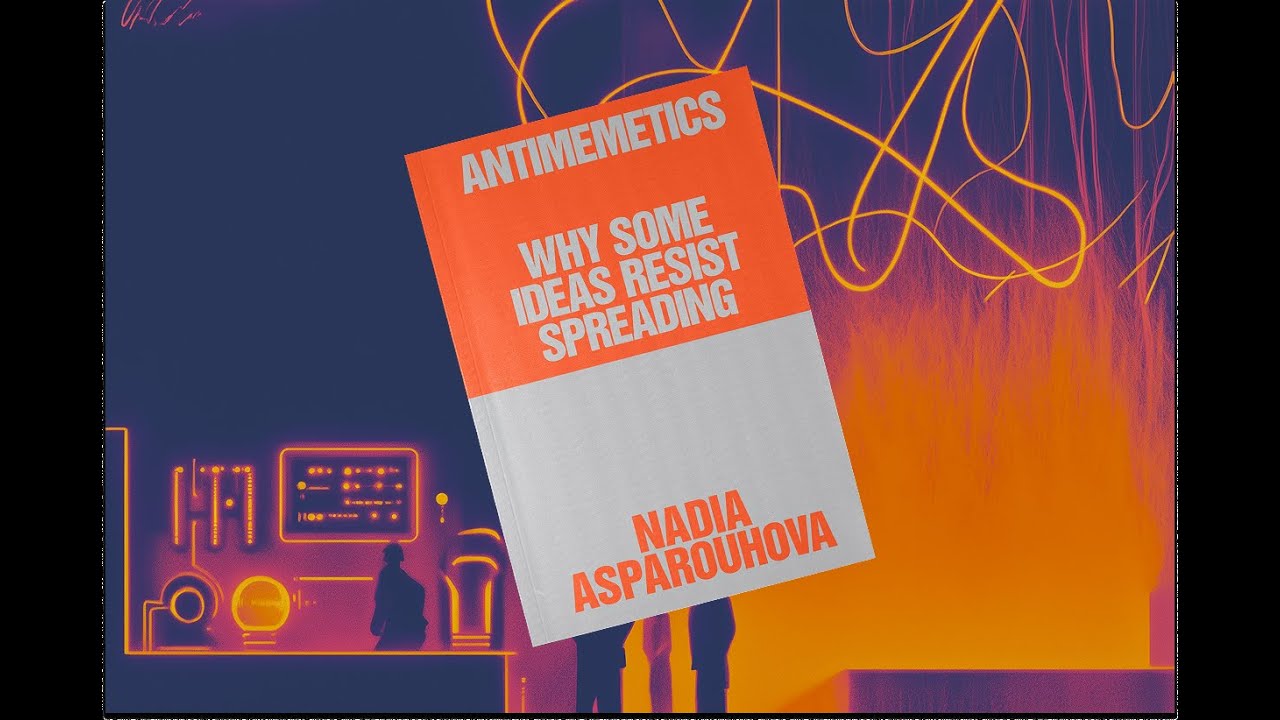
In this fireside chat, Nadia Asparouhova discusses the concept of anti-memes—ideas that resist spreading or being remembered—drawing on SCP fiction and her book Anti-Mimetic. She extends an epidemiological analogy to online communities, critiquing Venkatesh Rao's 'cozy web' concept by comparing group chats to poorly-ventilated COVID pods that compress and mutate ideas rather than truly insulating people from them, and connects her SOP23 essay's 'Whitehead protocol' (good, attention-freeing automation) versus 'Kafka protocol' (bad, confusion-inducing bureaucracy) to how attention and memory shape which ideas survive.

Related resources

Talk

Archival Time as a New Natural Resource

Sachin Benny argues that AI modernity is reorganizing our relationship to the past the way industrial capitalism reorganized our relationship to the future, coining 'Archival Time' as a condition where traces of prior events become retrievable without recreating the event. He contrasts this with Bakhtin's 'Carnival Time,' bounded periods where accumulated traces lose authority and things get unmade and remade, drawing on William Sewell's eventfulness framework (path dependency, temporal heterogeneity, contingency) to argue eventful history requires a mix of both archival inheritance and carnivalesque rupture.

Sachin Benny

Fiction

A Visitor’s Guide to the Disposition

This is a polemical visitor's guide to a mysterious geographical site called the Disposition, written by an anonymous author who has observed it for forty years and disputes official narratives about its nature and nomenclature. The text rails against deliberate campaigns of misinformation and mischaracterization by institutional authorities, establishing the author's preferred terminology and framing as the correct interpretation of this contested place.

Elizabeth Maher

Article

Reflections From Memoria

Kei Kreutler reports from Memoria, an unconference on spaced repetition and memory systems organized by Saul Munn and Raj Thimmiah. The Memory Research Group is launching a new module on digital memory architectures, examining memory management in AI, computational memory history, and how digital technologies reshape human remembrance.

Kei Kreutler